WHAT ARE COMPOST TOILETS and HOW DO THEY WORK?
At Tierramor, our commitment to regenerative living extends into the most ordinary parts of daily life - including how we relate to water, waste, and soil.
In the tropical dry forest of Guanacaste, water is both precious and seasonal. Composting (or “dry”) toilets are one way we reduce our impact on local water systems while participating in a longer ecological cycle - one that transforms waste into nourishment for the land.
Rather than flushing valuable nutrients away with drinking water, dry toilets allow organic material to decompose naturally over time, returning safely to the soil through intentional land stewardship practices.
This is not just a technical system - it’s a cultural practice rooted in awareness, responsibility, and regeneration.
HOW DRY TOILETS SUPPORT the ECOSYSTEM
Traditional flush toilets use several litres of clean water per use. In contrast, composting toilets operate without water, relying instead on carbon material - like sawdust from pruned or fallen plants around the property - to support decomposition and maintain balance within the system.
This simple shift:
Conserves water during long dry seasons
Reduces strain on septic and wastewater systems
Returns nutrients back to the land
Supports regenerative land management practices
At Tierramor, the compost generated from these systems is carefully processed and later used in agro-forestry systems and reforested areas across the property. These nutrients help restore soil life, support tree growth, and contribute to the long-term health of the ecosystem.
In this way, what might normally be considered “waste” becomes part of a living cycle of renewal.
HOW COMPOSTING TOILETS WORK (a closer look)
Composting toilets are designed to support aerobic decomposition, the same natural process that breaks down leaves and organic matter on a forest floor.
For decomposition to happen effectively, three elements must stay in balance:
Carbon — provided by sawdust or other dry plant material
Nitrogen — from organic human waste
Oxygen — maintained through airflow in the compost system
Adding sawdust after each use helps maintain this balance by absorbing moisture, reducing odor, and creating the conditions needed for beneficial microorganisms to thrive.
Over time, microbes, fungi, and other decomposers break down the material into stable organic matter. At Tierramor, this process happens slowly and intentionally in designated composting systems, where materials are left to fully decompose before being returned to the land.
This curing period is essential - it allows the material to transform safely into soil-building compost that can support reforestation and ecosystem restoration.
In nature, there is no waste - only cycles of transformation. Composting toilets simply work in alignment with that principle.
IS COMPOST from DRY TOILETS SAFE to USE?
It’s natural for people to wonder about the safety of composting systems that process human waste. The key difference between fresh waste and compost is the decomposition and curing process. Once organic material is fully broken down by microorganisms and allowed to cure over an extended period, it becomes stable organic matter - similar to composted manure from animals like cows or horses, which are widely used in agriculture and reforestation.
In fact, from a soil perspective, human waste is not fundamentally different from other animal manures - all contain nutrients and organic matter that microorganisms can transform into soil-building material when properly composted. Time, oxygen, microbial activity, and carbon balance are what make the transformation safe.
At Tierramor, compost from dry toilets is not used in vegetable gardens or food production systems. Instead, it is returned to forest systems and reforested areas, where it contributes to soil regeneration, tree growth, and ecosystem restoration.
This approach follows common ecological sanitation practices around the world, where composted humanure is used in non-food landscapes to rebuild soil and support long-term ecological health.
USING a COMPOST TOILET
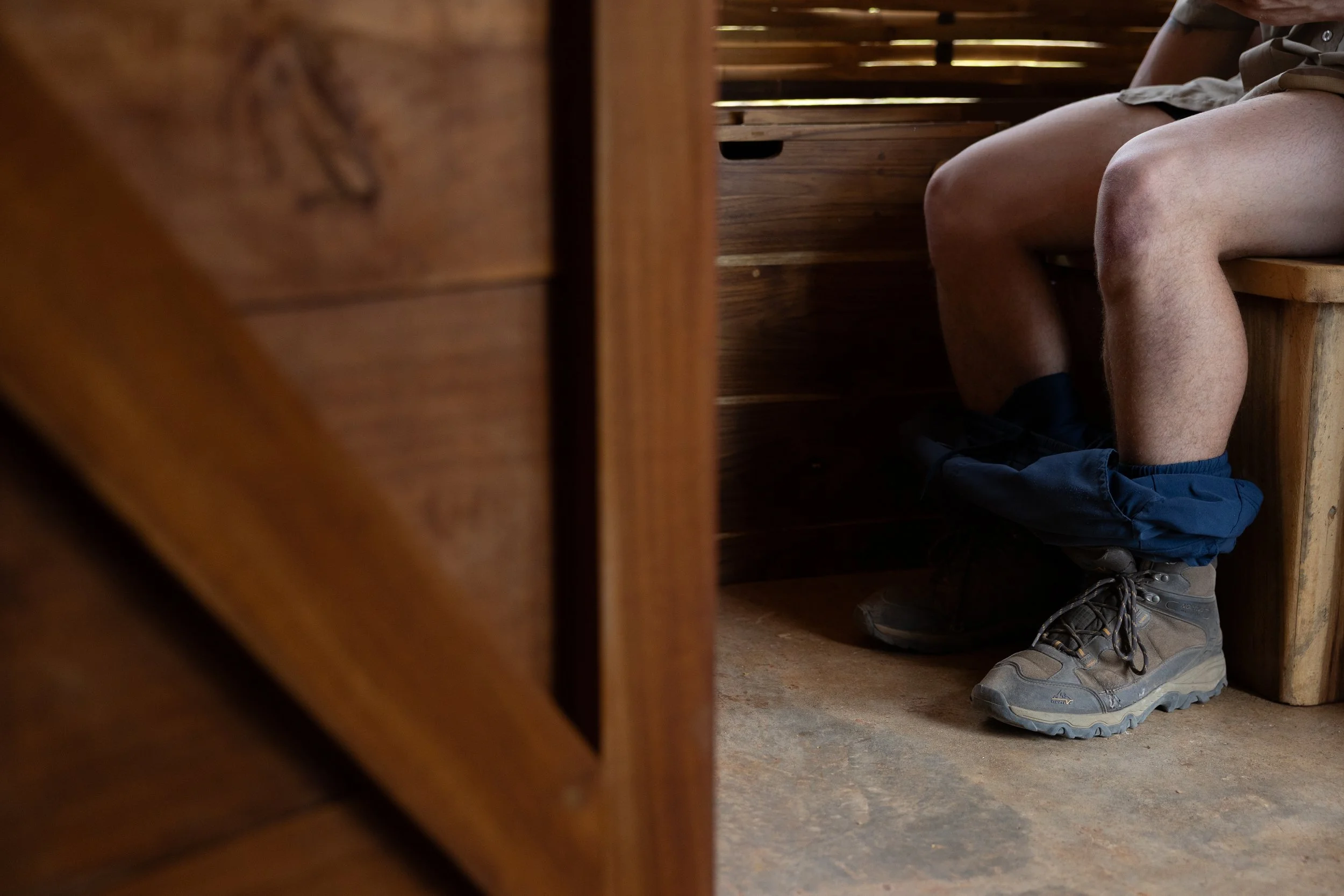
For many guests, using a composting toilet is a new experience - and often a surprisingly simple one.
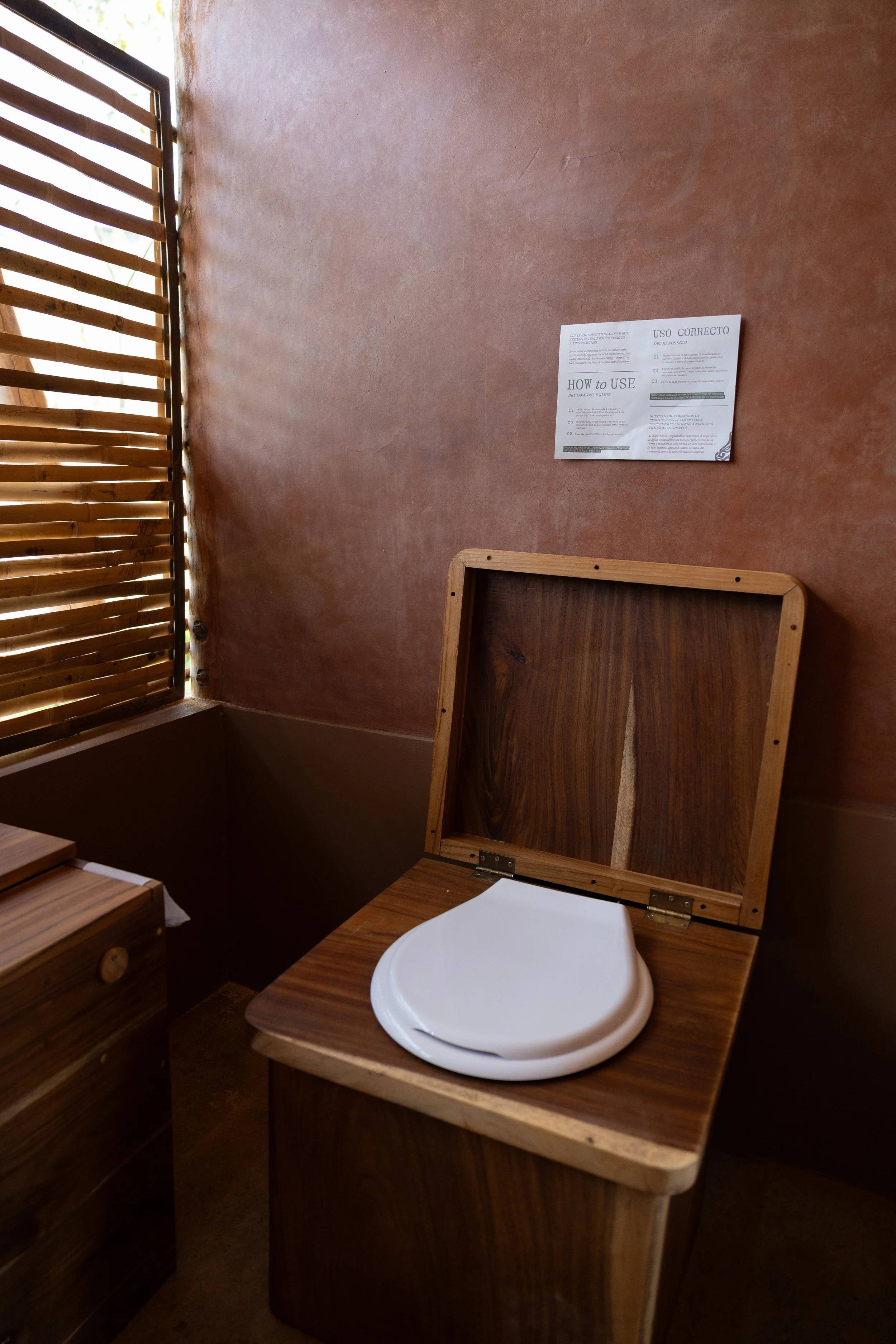
The process is straightforward: after use, 1-2 scoops of sawdust is added to the toilet. This helps manage moisture, eliminate odor, and support decomposition. The system is designed to be clean, intuitive, and low-impact.
Most people find that after the first use, it quickly becomes second nature.
And there’s often a quiet shift that happens - a moment of awareness about how everyday actions connect to larger ecological systems. Something as routine as using the bathroom becomes an opportunity to participate in regeneration.
A PRACTICE of REGENERATIVE LIVING
Living in harmony with the land doesn’t always mean dramatic changes. Often, it’s found in small, consistent practices that align daily life with ecological cycles.
Dry toilets are one of many systems at Tierramor that reflect this philosophy - simple, practical, and rooted in long-term care for the earth.
From the forest gardens to the compost systems, each element is part of an evolving ecosystem, inviting us to reconsider our relationship with resources, responsibility, and renewal.
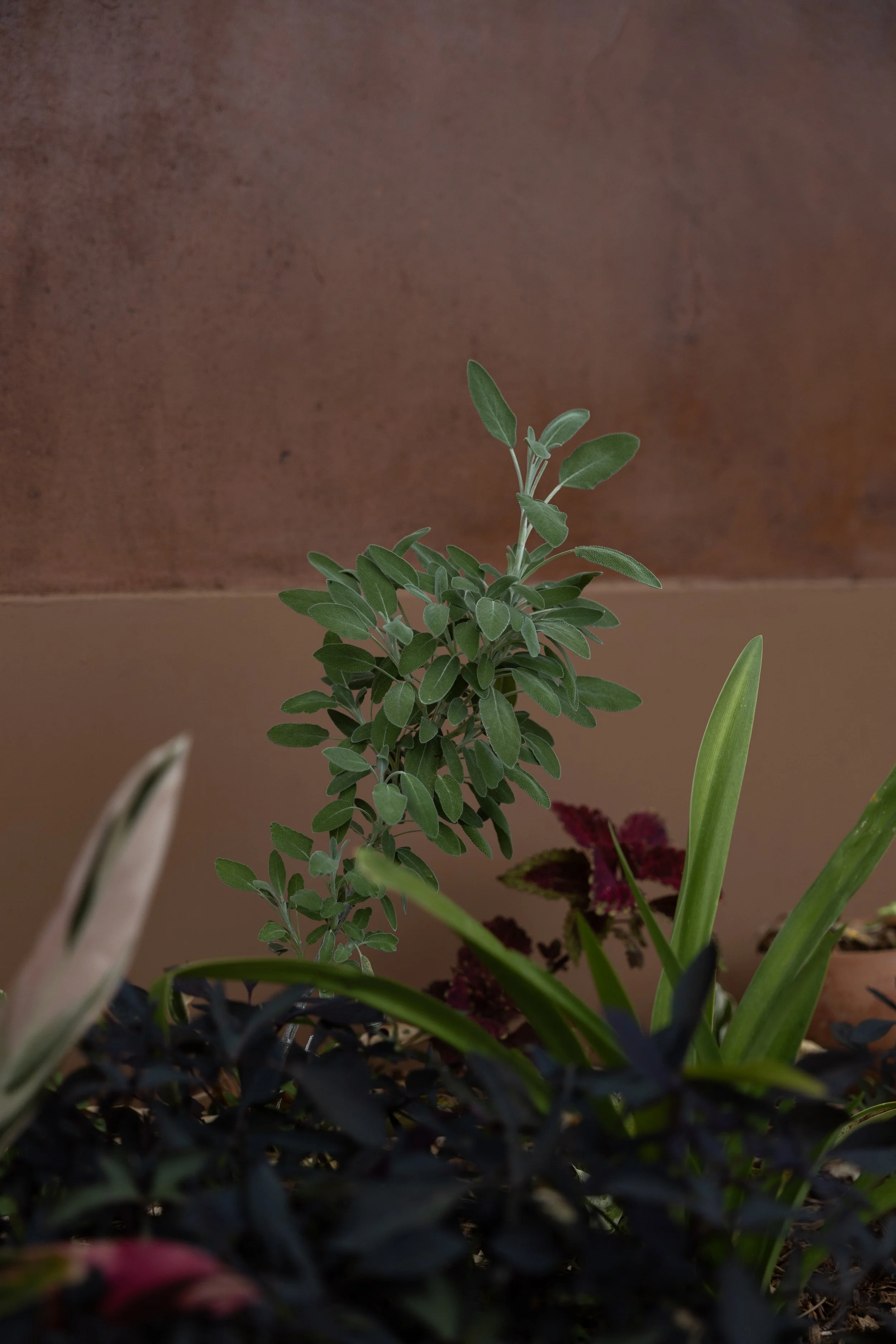
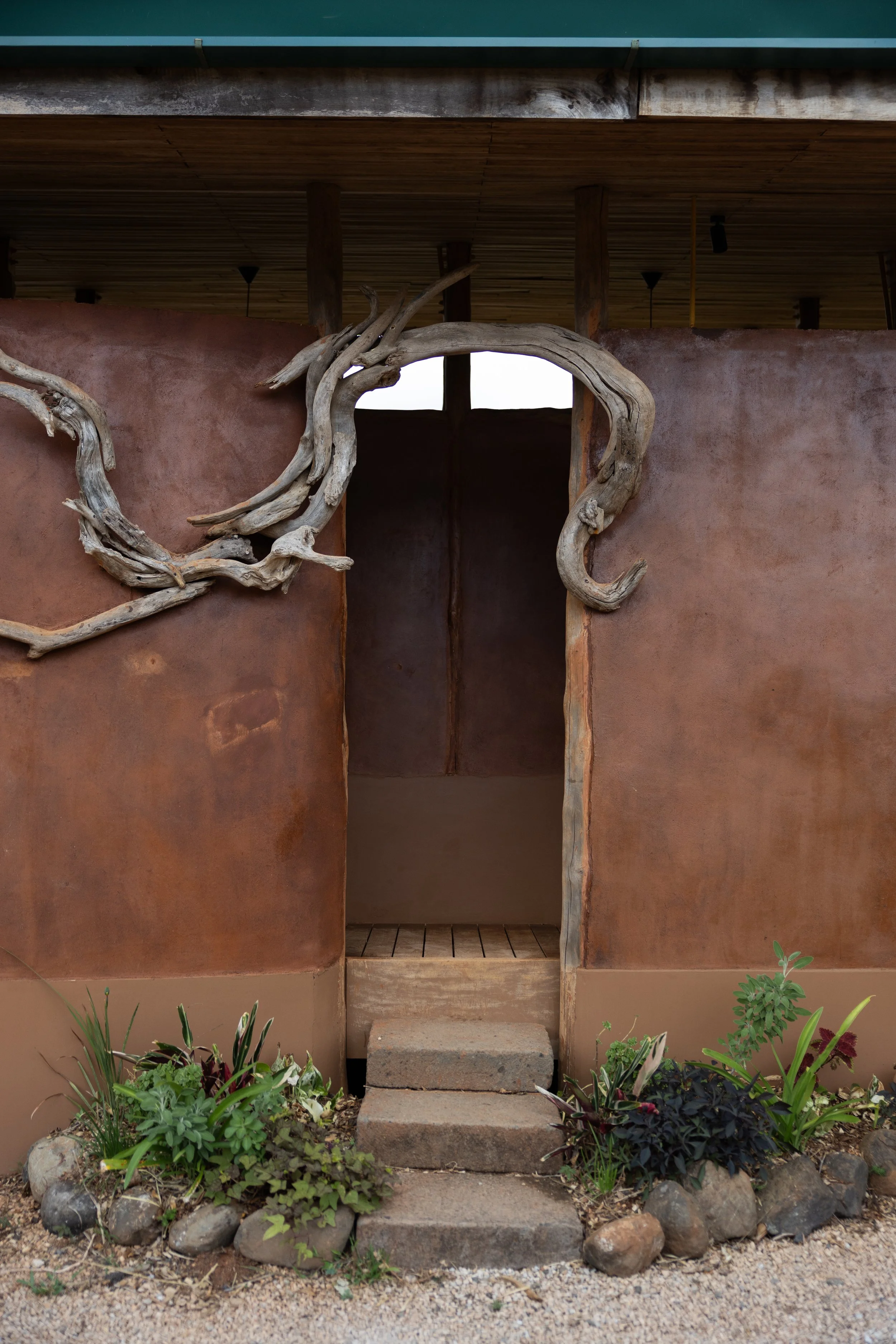
Our bathroom spaces are designed with this same intention. Built with bahareque (earthen walls) and finished in tadelakt, they use natural materials that connect the structures back to the land. Surrounded by thoughtful landscaping, these spaces feel integrated into the surroundings - reminding us that regenerative systems can be not only functional, but also beautiful.